
Microchip PIC16F876A-I Microcontroller: Architecture, Features, and Application Design
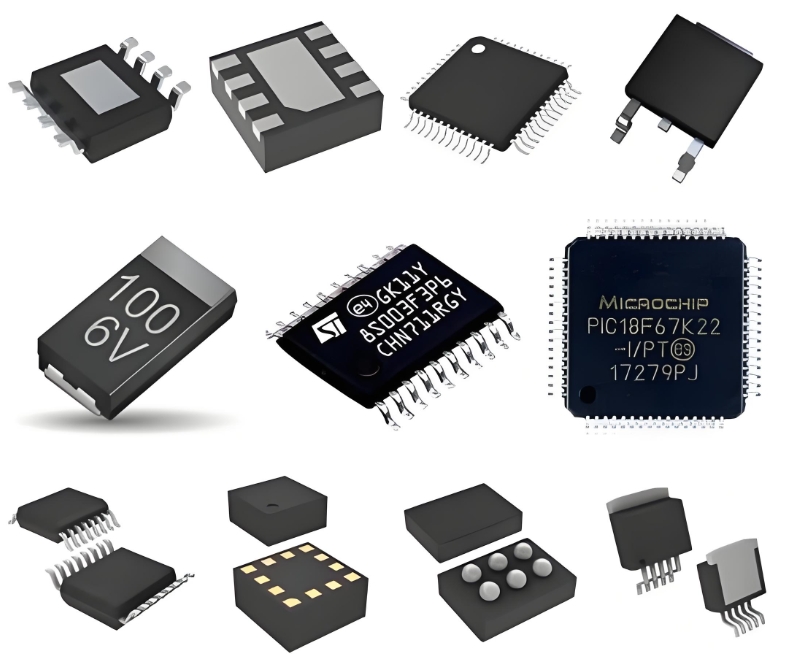
The Microchip PIC16F876A-I stands as a hallmark of versatility and reliability in the world of mid-range 8-bit microcontrollers. As a member of the venerable PIC16F87XA family, this device has empowered countless embedded systems with its robust architecture, rich peripheral set, and ease of use. Housed in a 28-pin SPDIP package, the '-I' suffix denotes its industrial temperature range, making it suitable for a wide array of demanding environments.
Architecture: A Harvard Design Powerhouse
At its core, the PIC16F876A employs a modified Harvard architecture, which features separate buses for instructions and data. This allows for simultaneous access to program and data memory, significantly enhancing throughput. The heart of the operation is the 8-bit RISC-based CPU, which executes a streamlined 35-word instruction set. Most instructions are single-cycle (200 ns at 20 MHz), achieving a peak performance of up to 5 MIPS.
The memory organization is a key aspect of its design:
8K x 14 words of Flash Program Memory: Offers ample space for complex applications and enables In-Circuit Serial Programming (ICSP) for easy firmware updates.
368 x 8 bytes of RAM (Data Memory): Provides volatile storage for variables and system data during operation.
256 x 8 bytes of EEPROM Data Memory: This non-volatile memory is crucial for storing critical data like calibration constants, device settings, or event logs that must persist after a power cycle.
Key Features and Peripherals
The PIC16F876A-I is packed with integrated peripherals that reduce system component count and cost:
Analog-to-Digital Converter (ADC): A 10-bit resolution ADC with up to 5 channels allows for precise measurement of analog signals from sensors.
Timers: It includes three timers (Timer0: 8-bit, Timer1: 16-bit, Timer2: 8-bit with period register) for tasks ranging from simple delays to complex waveform generation.
Capture/Compare/PWM (CCP) Modules: Two CCP modules provide functionality for pulse width modulation (PWM) motor control, frequency measurement, and accurate timing of external events.
Serial Communications: It supports multiple serial protocols, including a Master Synchronous Serial Port (MSSP) that can be configured for either I²C or SPI, and a Universal Synchronous Asynchronous Receiver Transmitter (USART) for RS-232/485 communication.
In-Circuit Debugging (ICD): This feature, supported by the dedicated ICD pins, drastically simplifies the development and debugging process.
Application Design Considerations
Designing with the PIC16F876A involves leveraging its integrated features to create efficient and compact systems. A typical design process includes:
1. Clock Source Selection: The microcontroller can be driven by a precise external crystal, a resonator, or its internal RC oscillator, depending on the application's timing accuracy requirements.
2. Power Management: It features multiple power-saving modes, including SLEEP mode, which drastically reduces power consumption for battery-operated devices.
3. Peripheral Interfacing: The ADC is ideal for connecting temperature, light, or potentiometer sensors. The PWM outputs are perfect for directly driving small motors or LEDs with variable intensity. The serial peripherals enable communication with other ICs, memory chips, or a PC.
4. Hardware Robustness: Features like a Brown-out Reset (BOR) and a Watchdog Timer (WDT) ensure reliable operation in the presence of power fluctuations or software hangs, which is critical for industrial applications.
Common applications include industrial control systems (sensor monitoring, actuator control), automotive systems (dashboard displays, fan control), consumer electronics, and sophisticated hobbyist projects like robotics and data loggers.
In summary, the Microchip PIC16F876A-I remains a highly capable and well-supported microcontroller. Its balanced combination of processing power, abundant peripherals, and non-volatile memory makes it an enduring choice for engineers designing robust embedded systems for industrial and commercial markets. Its architecture is optimized for deterministic execution and low-latency interrupt handling, solidifying its role as a workhorse in the embedded world.
Keywords:
1. Harvard Architecture
2. In-Circuit Serial Programming (ICSP)
3. Analog-to-Digital Converter (ADC)
4. Pulse Width Modulation (PWM)
5. Industrial Temperature Range

