
A Comprehensive Analysis of the Microchip MCP6042 Dual Op-Amp's Ultra-Low-Power Performance
In the rapidly evolving landscape of electronic design, the relentless drive towards battery-powered and energy-harvesting applications has made ultra-low-power operation a paramount specification. Among the key components enabling this revolution is the operational amplifier. The Microchip MCP6042 dual operational amplifier stands out as a pivotal solution engineered specifically for scenarios where minimizing power consumption is the primary design constraint.
At the heart of the MCP6042's performance is its remarkably low quiescent current. The device typically draws a mere 600 nanoamps (nA) per amplifier, a figure that is orders of magnitude lower than traditional general-purpose op-amps. This minuscule current consumption directly translates to extended battery life, making it an ideal candidate for portable medical devices, wireless sensor nodes, and always-on environmental monitoring systems. This feat is achieved through sophisticated CMOS semiconductor design, which optimizes the internal transistor biasing for sub-threshold operation, ensuring functionality at a minimal energy cost.
However, achieving ultra-low power often involves navigating a classic engineering trade-off: performance versus power. The MCP6042 masterfully balances this equation. While it forgoes the bandwidth and slew rate of high-speed amplifiers, it delivers more than sufficient performance for its target applications. With a gain bandwidth product of 14 kHz and a slew rate of 6 V/ms, it is perfectly suited for amplifying low-frequency signals from sensors such as thermistors, piezoelectric elements, and slow-changing pressure transducers. Its input common-mode range extends beyond the rails, allowing designers to work with signals very close to the power supply boundaries, a common scenario in single-supply, low-voltage systems.
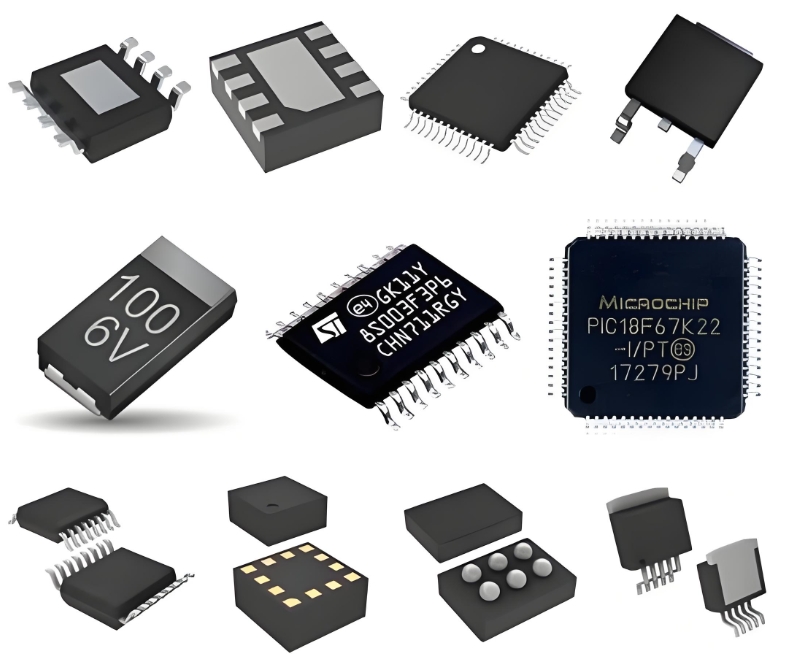
Furthermore, the amplifier exhibits excellent power-supply efficiency. It is specified for operation from a supply voltage range of 1.4V to 5.5V, covering the spectrum from a single-cell battery to a regulated 3.3V or 5V rail. This wide operating range ensures consistent performance as a battery discharges and its voltage decays. Notably, the device maintains its low-power characteristics across this entire voltage spectrum, providing designers with significant flexibility.
The MCP6042 also incorporates critical features that enhance its practicality in real-world designs. The inclusion of rail-to-rail input and output operation maximizes the dynamic range available to the signal, ensuring no headroom is wasted. This is crucial when every millivolt of resolution counts in a low-voltage system. Additionally, its built-in EMI filtering hardens the device against high-frequency interference, a common challenge in densely packed portable electronics.
In conclusion, the Microchip MCP6042 is not merely a low-power component; it is a meticulously engineered enabler of ultra-low-power systems. By prioritizing quiescent current without completely sacrificing necessary AC and DC performance, it provides a robust and reliable foundation for a new generation of power-sensitive electronic designs. Its combination of nanoamp-level current draw, rail-to-rail capability, and wide operating voltage range makes it an indispensable tool for engineers battling against the constant constraints of battery capacity and energy consumption.
ICGOODFIND: The MCP6042 is an exceptional choice for designers where longevity and energy efficiency are non-negotiable. It excels in applications demanding signal conditioning with an ultra-low power budget, offering a perfect blend of sufficient performance and minimal quiescent current, solidifying its status as a go-to amplifier for energy-conscious innovation.
Keywords: Ultra-Low Quiescent Current, Rail-to-Rail Input/Output, Wide Supply Voltage Range, Low-Power CMOS, Sensor Signal Conditioning

