
NXP 74LVC04APW: A Comprehensive Technical Overview of its Hex Inverter Functionality and Application
The NXP 74LVC04APW is a fundamental integrated circuit belonging to the 74LVC family of low-voltage CMOS logic devices. As a hex inverter, it incorporates six independent inverters, or NOT gates, within a single compact TSSOP-14 package. This IC is engineered to provide high performance, low power consumption, and robust operation, making it a ubiquitous component in modern digital design.
Core Functionality: The Inverter
At its heart, each of the six gates performs the basic Boolean logic function of inversion. The output signal is always the opposite logic state of the input signal.
Input High (V~IH~): Output goes to Low (GND)
Input Low (V~IL~): Output goes to High (V~CC~)
This simple yet critical function is the building block for more complex circuits like oscillators, buffers, and logic level translators.
Key Technical Specifications
The 74LVC04APW is defined by a set of electrical characteristics that dictate its application range:
Wide Supply Voltage Range (1.2 V to 3.6 V): This is a hallmark of the LVC family. It allows the IC to interface seamlessly between devices operating at different voltage levels (e.g., 1.8V, 2.5V, 3.3V), a common requirement in mixed-voltage systems like smartphones and IoT devices.
High Noise Immunity: CMOS technology provides excellent noise margin, ensuring reliable operation in electrically noisy environments.
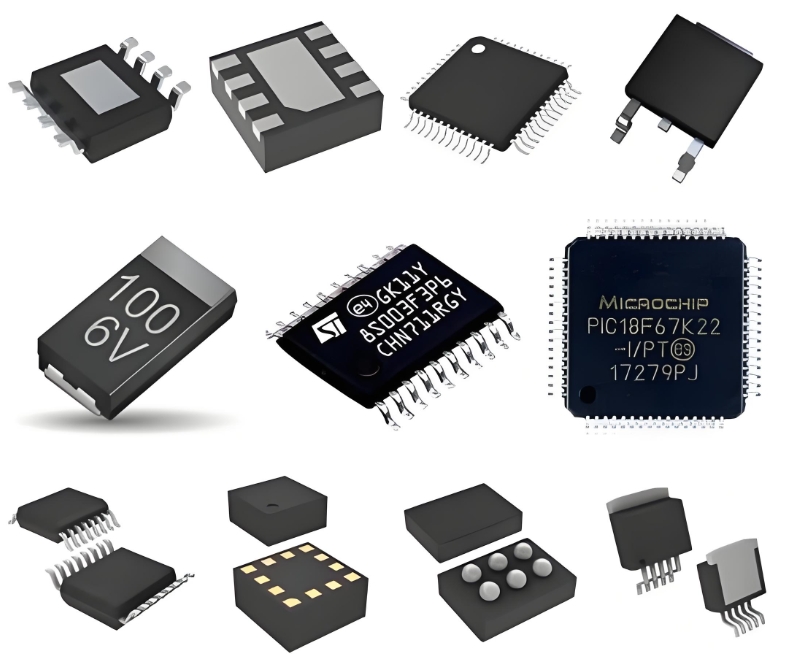
Low Power Consumption: Its CMOS architecture ensures very low static power dissipation, which is critical for battery-powered and portable applications.
High-Speed Operation: With typical propagation delay times of only a few nanoseconds (e.g., ~4.3 ns @ 3.3V), it is suitable for high-speed signal processing.
Overvoltage Tolerant Inputs: The device's inputs can tolerate voltages up to 5.5V, even when the supply voltage (V~CC~) is 0V. This feature is crucial for hot-plugging and fail-safe applications where the input signal might be present before the power supply is stable.
Application Circuits
The versatility of the 74LVC04APW is demonstrated in its wide range of applications:
1. Logic Level Translation: Its wide operating voltage range makes it ideal for shifting logic levels between different parts of a system, such as between a 3.3V microcontroller and a 1.8V sensor.
2. Crystal Oscillator Circuit: A fundamental application is using two inverters to build a Pierce oscillator circuit, providing a stable clock source for microcontrollers and other clocked devices. One inverter is configured as the active amplifier, while another buffers the output.
3. Waveform Shaping and Squaring: It can be used to clean up and square off noisy or slow-rise-time digital signals, restoring them to clean, rail-to-rail logic levels.
4. Schmitt Trigger: By adding a single resistor in a feedback loop between the output and input of an inverter, it can be converted into a simple Schmitt trigger, introducing hysteresis for improved noise rejection on slow-moving input signals.
5. General Purpose Logic: It serves as a basic building block for constructing more complex gates like flip-flops, pulse generators, and data path control logic.
ICGOOODFIND: The NXP 74LVC04APW stands out as an exceptionally versatile and robust solution for digital signal inversion and level shifting. Its combination of a wide voltage range, high speed, low power, and overvoltage tolerance secures its role as a critical component in everything from consumer electronics to industrial systems. For designers, it offers a reliable, cost-effective, and readily available means to solve a multitude of interface and signal conditioning challenges.
Keywords: Hex Inverter, Logic Level Shifter, Low-Voltage CMOS (LVC), Overvoltage Tolerant, TSSOP-14 Package.

